



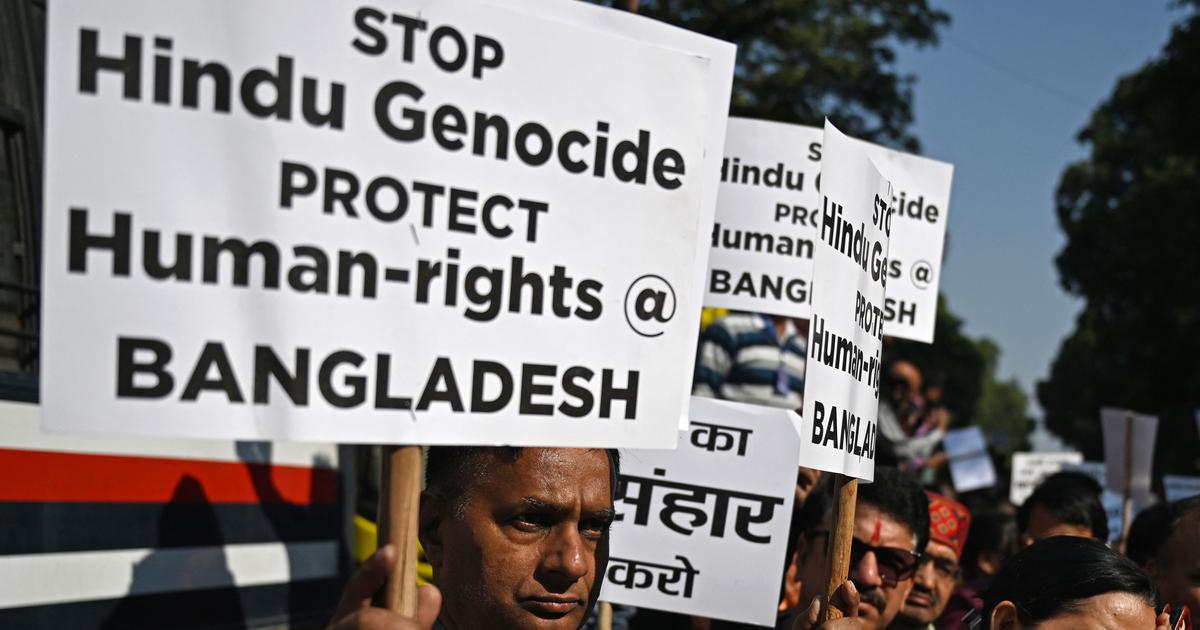
The lynching on December 18 of Dipu Chandra Das, a Hindu man in Bangladesh’s Mymensingh district, over allegations of blasphemy against Prophet Muhammad, put the focus on the horrors of majoritarian vigilante mob justice. Das’s killing was followed by further violence against Hindus across the border.
The killing sparked massive outrage in India among ordinary citizens, politicians, the media and even celebrities. The Indian government officially expressed its concern about the “barbaric killing”. The reactions are entirely justified. After all, if such horrendous violence has to be prevented, it must be met with visceral anger and condemnation.
But the response caused some to ask: should outrage be channeled on the lines of religion, nationality and ethnicity?
Within days of Das being killed, there were at least four lynchings in India: Mohammad Athar Hussain, a cloth vendor in Bihar; Ramnarayan Baghel, a migrant worker from Chhattisgarh in Kerala; Jewel Sheikh, a worker from West Bengal in Odisha; and Anjel Chakma, a student from Tripura in Uttarakhand. These killings did not traumatise our national consciousness as Das’s did.
Only Chakma’s death got some attention. There were no primetime news debates or condemnations from powerful ministers. In this selective outrage, a Bangladeshi player was barred from playing in the IPL cricket tournament.
India has chosen to ignore the powerful exhortation by American civil rights activist Martin Luther King, Jr that “injustice anywhere is a threat to justice everywhere”.
After the Bharatiya Janata Party assumed power in 2014, India saw a spurt in lynching on the basis of religion. An overwhelming number of victims were Muslim. The lynchings, among many others, of Mohammad Akhlaq, Pehlu Khan, Alimuddin Ansari, 16-year-old Junaid Khan, Ghulam Ahmed, Majlum Ansari and 12-year-old Imitiaz Khan and Rakbar Khan drew international attention. This prompted the Supreme Court to ask Parliament to consider drafting a separate law for mob lynching.
Though there is no central law, Section 103(2) of the Bharatiya Nyaya Sanahita punishes mob violence.
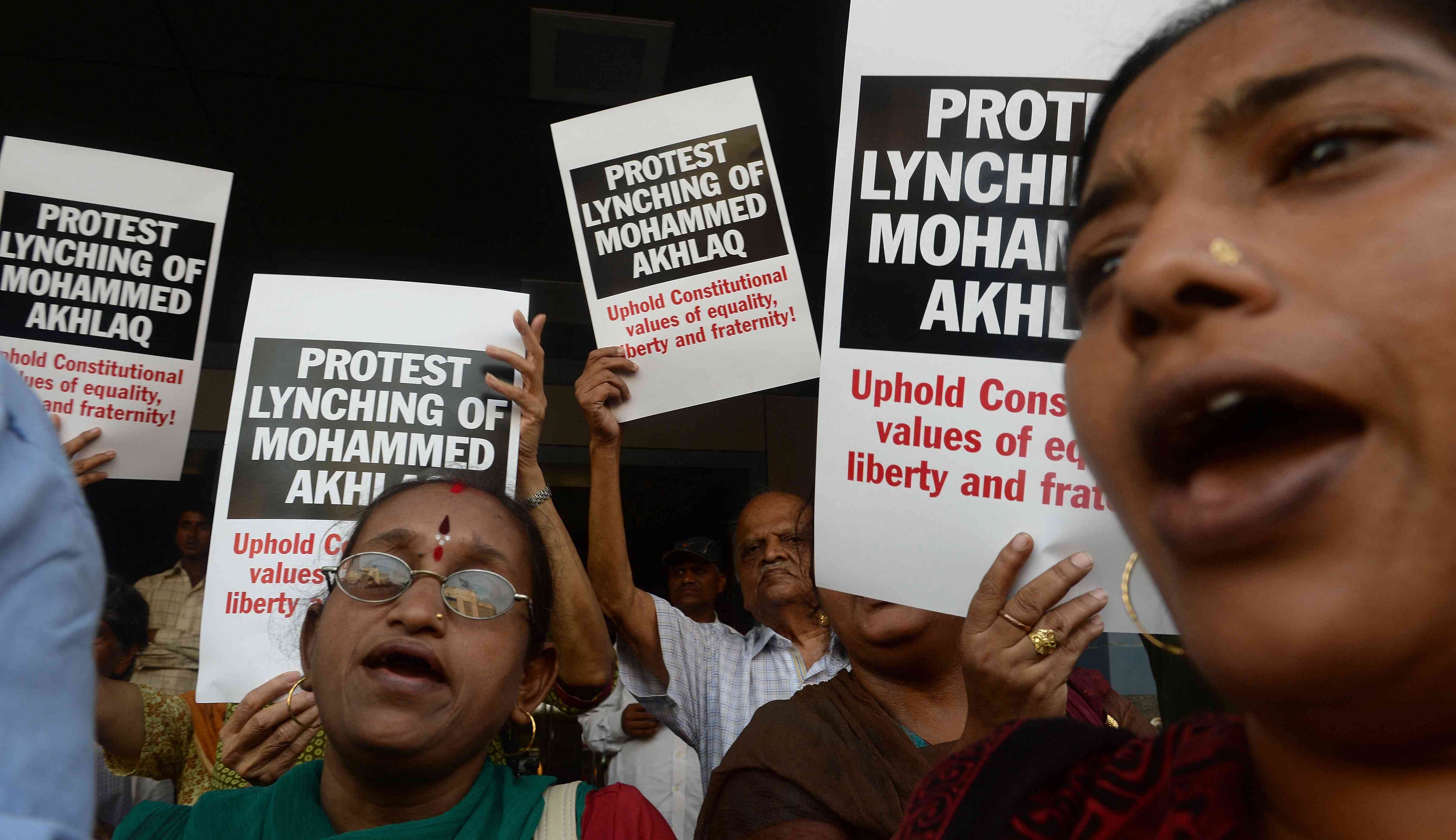
In contrast, the spate of lynchings since 2024 has not troubled the national imagination and has scarcely received media time. It reveals a shocking normalisation of hate against minorities. In June 2024 alone, Guddu Khan and Chand Miya Khan, Mohammed Farid, and Salman Vohra were lynched. In August 2025, 20-year-old Suleman Khan Pathan was killed by a mob, which included his close friends.
Lynching and mob violence against minorities are tools to enforce ethnic or religious hierarchy and control, to punish alleged social transgressions, to enforce segregation or are driven by the fear of those considered outsiders.
In Bangladesh, Dipu Chandra Das in Mymensingh had a factory job, which many among the mob that killed him probably coveted. Many of the lynchings in India mentioned above were carried out by cow vigilantes. But Ramnarayan Baghel was a Hindu Dalit worker from Chhattisgarh in Kerala, whom the mob, consisting of Hindus, believed was a thief and a Bangladeshi.
Similarly, Jewel Sheikh was a Bengali Muslim worker in Odisha butmob accused him of being a Bangladeshi. To the Uttarakhand mob that killed Anjel Chakma, from Tripura, he was “Chinese”.
Majoritarian mob violence is particularly brutal. Dipu Chandra Das was dragged, hung and burned in public view, all while being filmed. Ram Narayan Baghel in Kerala had more than80 injuries on his body: the doctors say that he was “beaten like an animal”. In Bihar, the mob stripped Athar Hussain to confirm that he was a Muslim, burned his flesh, beat him with rods and cut his ears with pliers.
The gravest mistake that can be made is in believing these incidents are aberrations. They are a symptom of polities under majoritarian convulsion. Dipu Chandra Das’s murder was a consequence of the process when a nation wants to conceive itself in the image of its religious majority – in this case, Muslim.
It is a vision that does not believe in a democratic compact in which every citizen is equal, irrespective of religion, a secularism that is enshrined in the Constitution that Bangladesh now wants to remove.
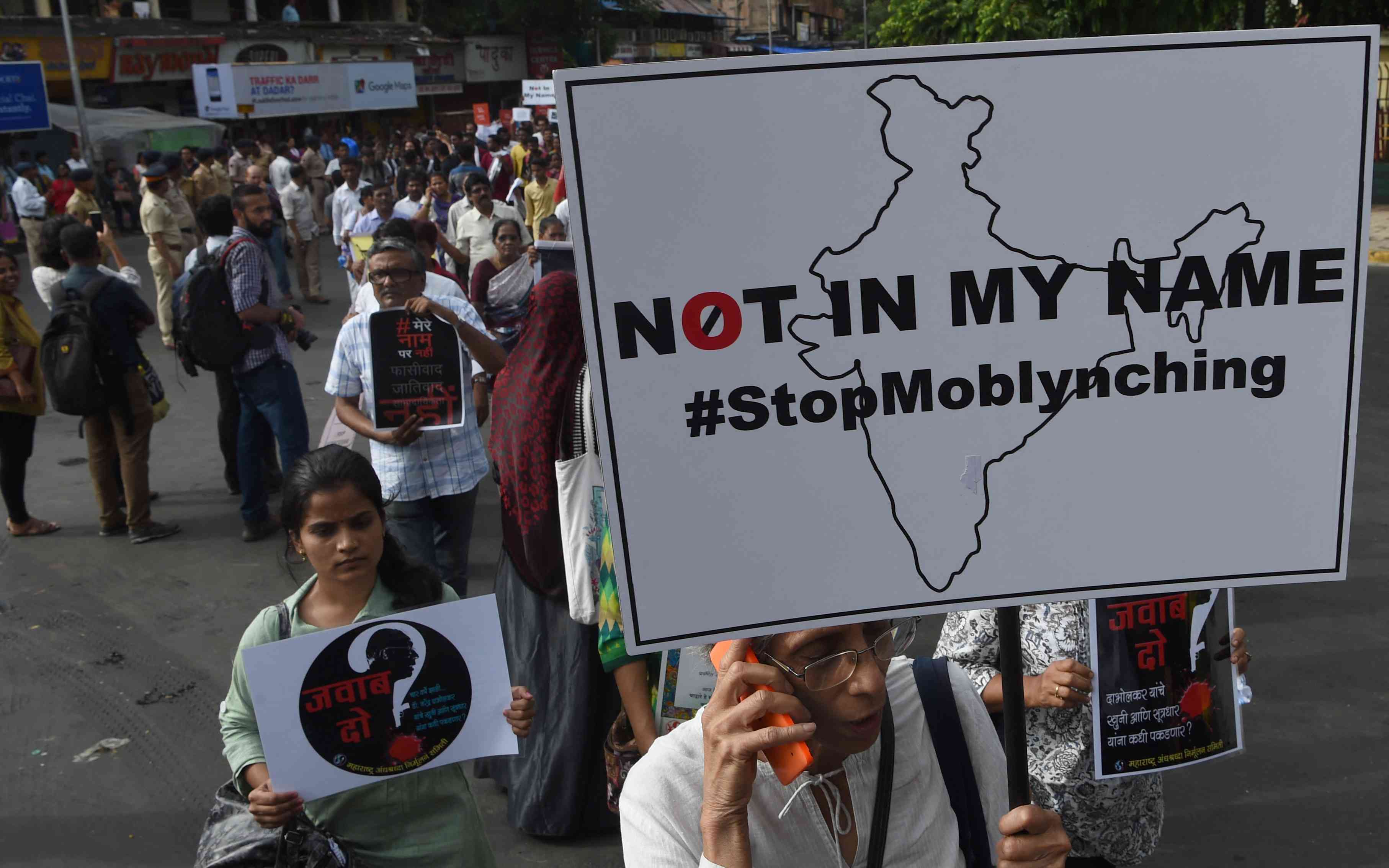
In India, similarly, religious nationalism and state and political display of religious identity have become central features of the polity. Cow vigilantism and allegations of so-called love jihad – the conspiracy theory held by Hindutva supporters that Muslim men are luring Hindu women into romantic relationships solely to force them to convert to Islam – stem from a deep sense of victimhood in which the majority religion believes it is being overrun by the minority.
This Christmas saw numerous attacks on Christians: Hindutva supporters disrupting prayers asserting that India is a Hindu Rashtra, vandalising Christmas celebrations in hotels, schools and malls, and even threatening poor vendors selling Santa Claus hats. In 2014, 147 incidents of violence against Christians were reported but that number reached 840 in 2024.
Majoritarian mob violence spreads terror among even those who are not attacked and creates permanent fissures out of religious animosities. Many leave their homes, like some Hindus in Bangladesh. In India too, Muslim families have left the villages where they lived for generations.
When Martin Luther King, Jr, contended that one should confront injustice everywhere, he was arguing with those who wanted to brand him an “outside agitator” for getting involved in civil rights activism beyond his home city and state.
In recent months, Indians have been more than eager to speak for Hindu minorities in other parts of the world, as they should. But many have forgotten to speak for religious minorities in India or even other Hindus when perpetrators are Hindu mobs themselves.
Mob killings are a barbaric blot on humanity in the 21st century. When we apportion our indignation on the basis of our religion, we do nothing to confront that barbarity.
Nissim Mannathukkaren is a professor at Dalhousie University, Canada. His X handle is @nmannathukkaren.
